The pros and cons of tooth implants can help you decide whether they fit your needs. In this short, 500-word read you’ll learn what implants are, their main benefits and drawbacks, who makes a good candidate, alternatives, what to expect during treatment, and key questions to ask your dentist so you can make an informed choice.
What are tooth implants?
Tooth implants are artificial tooth roots, usually made of titanium, placed into the jawbone. An implant has three parts: the implant post in the bone, an abutment that connects the post to the visible tooth, and a crown that looks like a natural tooth. Unlike bridges, implants don’t rely on nearby teeth for support, and unlike dentures, they are fixed and anchored to bone.
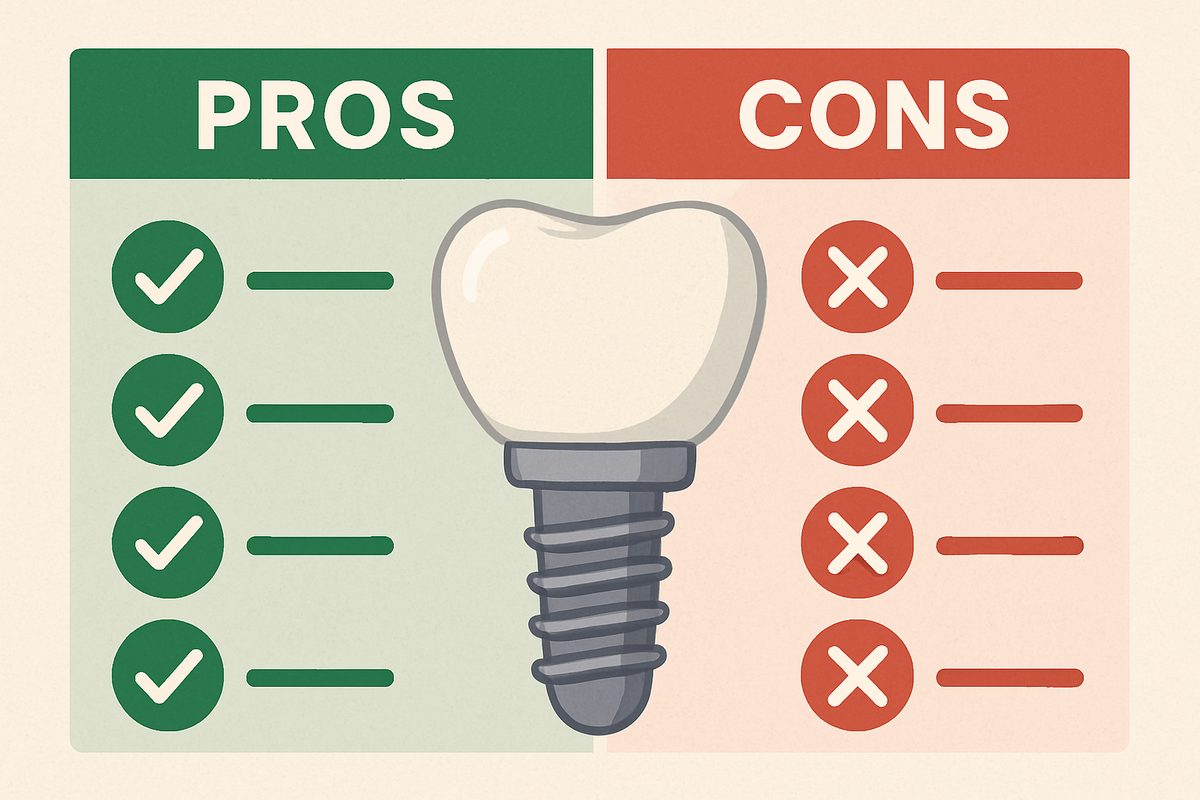
Understanding the pros and cons of tooth implants
Below are the major benefits and drawbacks. Read these to weigh whether implants match your health, timeline, and budget.
Top pros of tooth implants
Durability and long-term value
Implants can last decades with proper care, often longer than bridges and dentures. While the initial cost can be higher, fewer replacements and repairs often make implants more cost-effective over time.
Improved chewing, speech, and appearance
Because implants function like natural teeth, they restore bite strength and help with clear speech. Crowns are matched to your tooth color and shape, giving a natural look.
Bone preservation and oral health
Implants stimulate the jawbone like tooth roots do, which helps prevent bone loss and stops nearby teeth from shifting into gaps. This preserves facial structure and oral health.
Comfort and convenience
Implants are fixed and feel more natural than removable dentures. There’s no need for adhesives or nightly removal, and they cause less gum irritation.
Common cons of tooth implants
Higher upfront cost
The initial cost of implants is higher than bridges or dentures. Many dental plans have limited coverage, so out-of-pocket costs or financing may be needed.
Surgical risks and recovery time
Implant placement is a minor surgery. Risks include infection, swelling, and pain. Recovery can take days to weeks, with full healing of the bone taking months.
Need for sufficient bone and possible grafting
If your jawbone is thin or weak, you may need a bone graft before implant placement. Grafting adds time, cost, and recovery steps to treatment.
Longer overall treatment timeline
From consult to final crown, treatment often spans several months. Faster options like bridges or dentures can be completed in fewer visits.
Maintenance and possible complications
While rare, implants can fail or develop peri-implantitis (gum inflammation around an implant). Good oral hygiene and regular dental visits reduce these risks.
Who is a good candidate?
Good candidates are non-smokers or willing to quit, have controlled chronic conditions (like diabetes), adequate bone, healthy gums, and realistic expectations about cost and timeline.
Alternatives to implants
Fixed bridges: faster and less costly upfront but require shaping adjacent teeth. Removable partial or full dentures: lower cost and quick, but less stable and may need adhesives. Resin-bonded bridges: conservative for front teeth but less durable.
What to expect during evaluation and treatment
Expect digital X-rays and 3D imaging, a review of medical history, and a treatment plan. Sedation options and minimally invasive tools may be offered. Typical timeline: consult → implant placement → healing (months) → abutment and crown.
Questions to ask your implant dentist
– What is your implant training and experience? – What is your success rate? – Which imaging and planning technology do you use? – What sedation options are available? – Can you provide a full cost breakdown and financing? – What warranty or aftercare do you offer?
About treatment at State of the Art Dental Group
At State of the Art Dental Group in Rockville, MD, Dr. Kavish Gurjar — a NYU-trained dentist, Fellow of the International Congress of Implantologists, and member of the American Academy of Implant Dentistry — has restored hundreds of smiles. The practice uses digital X-rays, digital periodontal assessment, minimally invasive tools, sedation systems, and sleep apnea screening to make implant care precise and comfortable.
Ready to decide if implants are right for you?
If you’re weighing the pros and cons of tooth implants, schedule a consultation or screening to review your options and get a personalized plan. A short visit can clarify costs, timelines, and whether implants are the best fit for your smile.