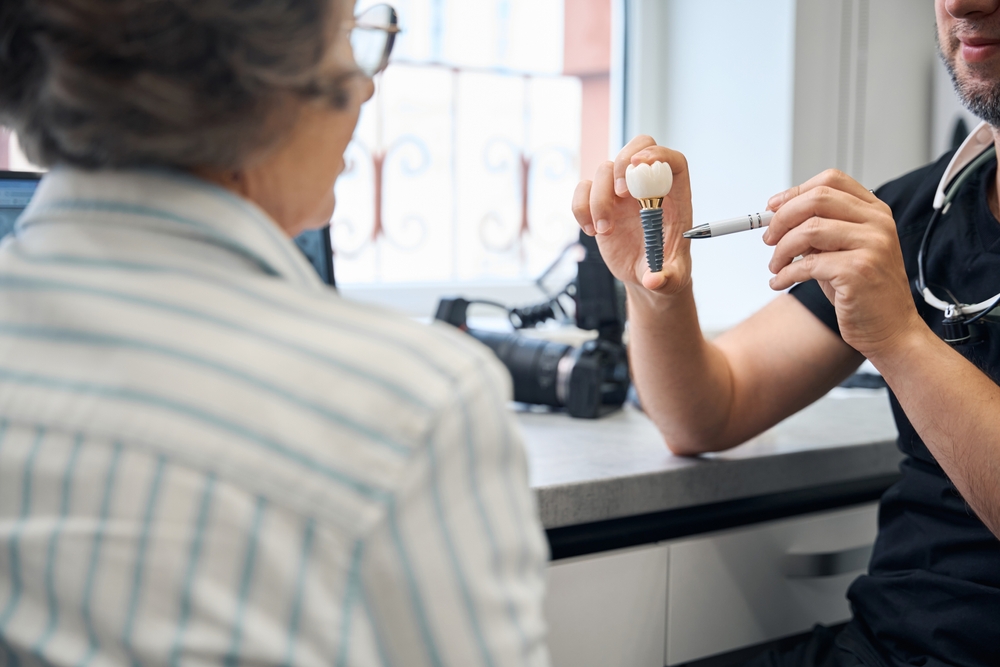
Dental implants are artificial tooth roots (usually titanium) placed into the jaw to support crowns, bridges, or dentures. This article answers “what is the downside of dental implants” so you can weigh medical risks, recovery time, costs, and alternatives before deciding.
Medical and biological risks
Infection and peri-implantitis
Bacteria can inflame the gums around an implant (peri-implantitis). Left untreated, this can cause bone loss and loosening of the implant. Good oral hygiene and regular cleanings reduce the risk.
Implant failure / poor osseointegration
An implant must fuse with bone (osseointegration). If healing fails, the implant may loosen and need removal or replacement. Smoking, poor bone, or uncontrolled disease raise this chance.
Nerve injury and sensation changes
Implant surgery can injure nearby nerves, causing numbness, tingling, or altered sensation in the lip, chin, or tongue. Most cases improve, but some changes can be long-term.
Sinus and anatomical complications
Upper-jaw implants near the sinus can intrude into the cavity or cause sinus infections if placed without proper imaging. Careful planning lowers this rare but real risk.
Surgery, recovery, and short-term downsides
Pain, swelling, and bruising
Expect soreness, swelling, and minor bruising after surgery for several days to two weeks. Over-the-counter or prescribed pain meds and cold packs typically control symptoms.
Anesthesia and sedation risks
Local anesthesia is low-risk, but sedation carries added risks and needs proper monitoring. Discuss medical history and sedation options with your dentist or oral surgeon.
Healing problems and longer recovery
Poor healing can occur with infection, smoking, or certain medications. Some patients need bone grafts or extra procedures that extend the timeline and recovery.
Functional and aesthetic downsides
Speech or bite adjustment
New implants or prosthetics can change your bite or speech slightly. Most people adapt in days to weeks, but adjustments to the restoration may be needed.
Appearance and matching natural teeth
Color, shape, or gum contours may not perfectly match natural teeth. Gum recession over years can expose implant edges and affect looks.
Long-term maintenance
Implants need daily hygiene and regular dental visits. Crowns or attachments can wear or break and may need repair or replacement over time.
Cost, time, and treatment complexity
Upfront cost and possible hidden expenses
Implants are more expensive than bridges or dentures. Costs can rise with bone grafts, CT scans, lab fees, and follow-up work.
Multiple visits and long timeline
Treatment is often staged—surgery, healing months, then restoration—so the process can take several months to a year depending on needs.
Who may NOT be a good candidate
Medical conditions and medications
Uncontrolled diabetes, immune disorders, certain cancer treatments, bisphosphonate use, and heavy smoking increase risks and may rule out implants.
Bone quantity and quality limits
Significant bone loss can require grafting or alternative treatments. If bone cannot support an implant, bridges or partials may be safer.
How modern tech and careful planning reduce downsides
Advanced imaging and minimally invasive tools
Digital x-rays and 3D imaging map nerves and sinuses precisely. Minimally invasive equipment and digital periodontal assessment reduce tissue trauma and errors.
Comfort and safety measures
Sedation dentistry systems, monitored sedation, and sleep apnea screening tools improve comfort and safety during complex cases.
Alternatives and decision checklist
Options: bridges, partials, or leaving gap
Bridges and partial dentures cost less and avoid surgery but may affect adjacent teeth. Leaving a gap risks shifting teeth and bone loss.
Questions to ask your dentist
Ask about experience, success rates, shown cases, risks, timeline, technology used, sedation options, and full cost estimate.
Why provider choice matters
Experienced, credentialed clinicians using modern tech lower risks and anxiety. Dr. Kavish Gurjar (NYU periodontal honors, Fellow of the International Congress of Implantologists, member of the American Academy of Implant Dentistry) and the team at State of the Art Dental Group in Rockville, MD combine training and digital tools to improve predictability.
Conclusion and next steps
In one sentence: the main downsides of dental implants are surgery-related risks, cost, time, and the need for lifelong maintenance. If you’re wondering “what is the downside of dental implants in Rockville, MD,” book a consultation or second opinion to review your health, timeline, and the safest option for your smile.