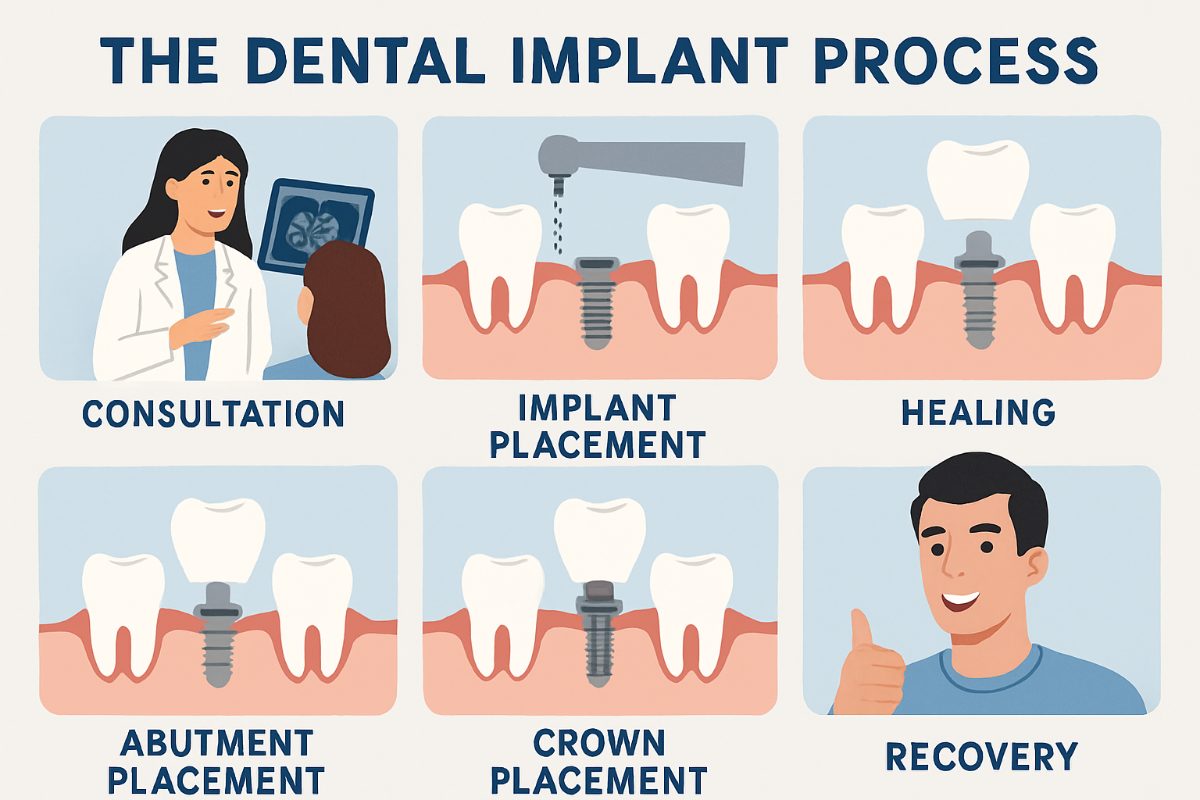
If you’re asking what is the dental implant process, it’s a staged treatment that replaces a missing tooth root with a titanium implant and then fits a crown or denture on top. Below is a clear, step-by-step overview so you know what to expect.
Who is a good candidate?
Good candidates have adequate jawbone, healthy gums (no active periodontal disease), and overall health that supports healing. Smoking, uncontrolled diabetes, or certain medications can affect success, so those are reviewed. People choose implants for a single missing tooth, to stabilize a loose denture, or to replace several teeth for better function and appearance.
Step 1 — Initial consultation and digital planning
The first visit includes an exam, medical history review, and imaging. Digital X-rays and a digital periodontal assessment map roots, bone levels, and gum health. This lets the dentist create a precise treatment plan, including implant size and placement angle. If you’ve searched “what is the dental implant process in Rockville, MD,” this digital planning step is often highlighted as essential for predictable results.
Step 2 — Preparatory treatments (if needed)
Some patients need extractions, bone grafting, or gum treatment first. These procedures add time—often several weeks to months—but build a stronger foundation for the implant. Treating infection or improving bone volume reduces the chance of failure and improves long-term outcomes.
Step 3 — Implant placement surgery
Placing the implant is a minor surgery performed with local anesthesia and optional sedation (oral sedation or nitrous oxide). Modern, minimally invasive equipment often means smaller incisions, less suturing, and faster recovery. The titanium implant is placed into the jawbone and covered to heal.
Step 4 — Healing and osseointegration
Over weeks to months, the implant fuses to the bone in a process called osseointegration. Normal healing includes mild swelling and tenderness the first few days, improving afterward. You’ll have follow-up checks and sometimes imaging to confirm stable integration before the next steps.
Step 5 — Abutment and crown placement
Once integrated, an abutment connects the implant to a custom crown, bridge, or denture. The restoration is matched for fit, bite, and appearance. This final step restores chewing, speech, and the smile’s look. If you’re comparing options, ask how the lab matches shade and contours for the most natural result.
What to expect after treatment: recovery and care
Expect mild pain controlled with OTC or prescribed meds, short-term soft-food diet, and careful oral hygiene. Avoid smoking and heavy lifting for several days. Routine dental visits and good home care protect the implant for years. Report unusual pain, persistent swelling, or numbness right away.
Possible risks and how they’re minimized
Rare complications include infection, nerve irritation, or sinus issues. Digital planning, thorough periodontal care, and minimally invasive tools reduce these risks. Following pre- and post-op instructions and keeping follow-up appointments further lowers complications.
Why choose State of the Art Dental Group for implants
Dr. Kavish Gurjar trained at NYU (periodontal honors program), completed advanced implant training, and is a Fellow of the International Congress of Implantologists. His work has been featured in Forbes, MSNBC Magazine, and Dentistry Today. State of the Art Dental Group in Rockville, MD uses digital X-rays, digital periodontal assessments, sedation systems, minimally invasive equipment, and sleep apnea screening to make implant care comfortable and precise.
Next steps / Call to action
Want a personalized answer to what is the dental implant process in Rockville, MD? Schedule an in-office or virtual consult to review your images and get a clear treatment timeline and cost estimate tailored to your needs.