An implant bone graft helps rebuild lost jawbone so a dental implant can be placed securely. Many patients ask, “Do I need an implant bone graft?” because missing teeth, infection, or long-term bone loss can make implants tricky. This post explains what an implant bone graft is, how dentists decide if you need one, the types of grafts, what to expect during treatment, risks, costs, and next steps.
What is an implant bone graft?
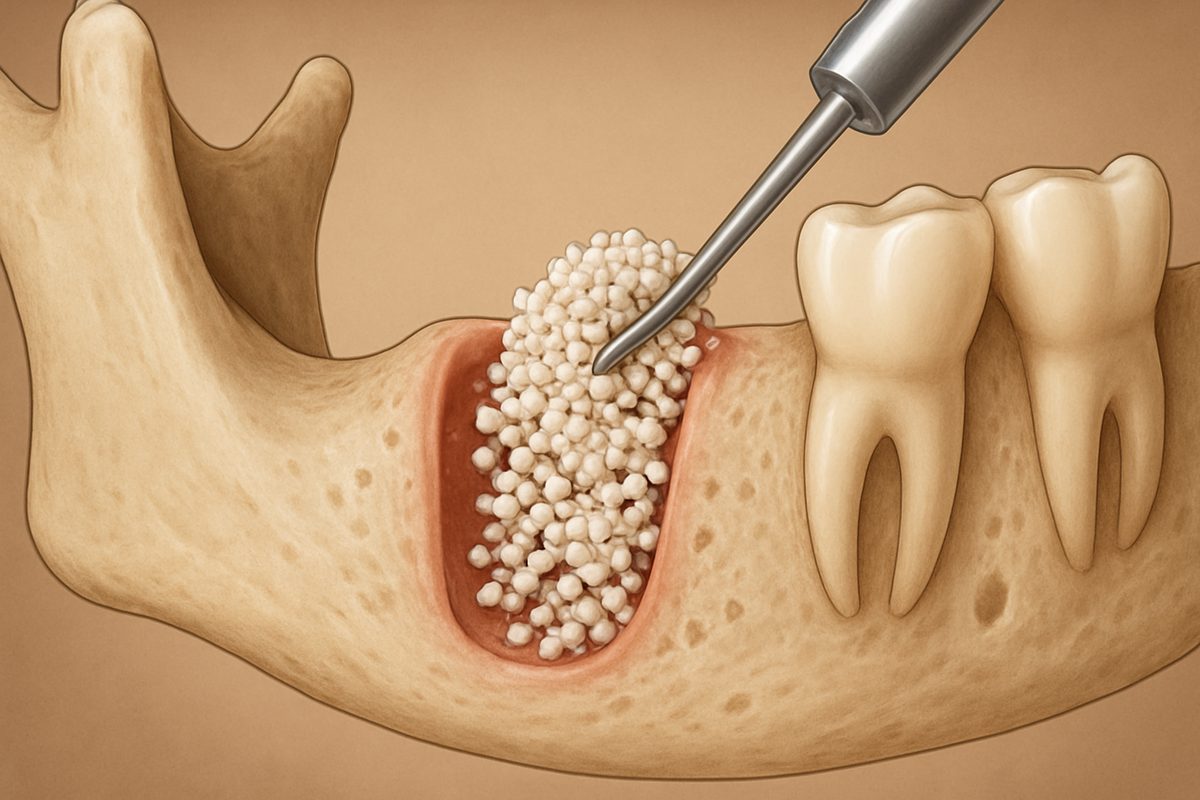
An implant bone graft is a procedure that adds bone or bone-like material to the jaw where an implant will go. Bone volume matters because the implant needs enough bone height and width to stay stable and integrate with your jaw. After tooth loss or infection, the jawbone can shrink or resorb, which is why an implant bone graft in Rockville, MD may be recommended before implant placement.
How dentists decide if you need an implant bone graft
Digital X-rays and 3D imaging
Imaging shows how much bone you have — height, width, and density. A 3D CBCT scan gives a clear view of the jaw and sinuses. Dentists use these images to plan whether an implant bone graft in Rockville, MD is necessary and what size graft will work best.
Digital periodontal assessment and clinical exam
Your gums and bite affect graft planning. Electronic gum measurements and a clinical exam check for inflammation, pocket depth, and gum recession that could impact graft success and timing.
Medical history and overall health factors
Conditions like diabetes, certain medications, and smoking affect healing. Your dentist reviews health history to decide if an implant bone graft is safe and when to do it.
Types of implant bone grafts
Autograft (your own bone)
This uses your bone from another site. It integrates best but requires an extra surgical area, which can add recovery time.
Allograft and xenograft (donor or animal bone)
Donor or animal bone is common and safe. It avoids a second surgical site and often has reliable healing times for an implant bone graft in Rockville, MD.
Synthetic grafts and bone substitutes
Synthetic materials are used when less bone is needed or to avoid biological materials. They can be very effective and reduce infection risk.
Socket preservation and sinus lift
Socket grafting is done at the time of extraction to preserve bone. A sinus lift adds bone under the sinus for upper back teeth when needed.
What to expect during an implant bone graft procedure
Preparation and sedation options
Options include local anesthesia, oral sedation, or nitrous oxide to keep you comfortable. Your dentist will review sedation and health history ahead of time.
Minimally invasive techniques and the actual graft placement
Modern tools reduce cutting and sutures. The dentist places the graft material, secures it, and may use membranes to protect it while it heals.
Healing timeline before implant placement
Healing typically takes a few months. Your dentist monitors bone growth with follow-up imaging to confirm when an implant can be placed.
Risks, complications, and how to lower them
Risks include infection, slow healing, or graft failure. Good oral hygiene, quitting smoking, managing medical conditions, and regular follow-ups lower these risks.
When an implant bone graft may not be needed
Alternatives include narrow implants, immediate implants with minimal grafting, or orthodontic tooth movement to create space. A careful evaluation determines the best option.
Cost and insurance basics for an implant bone graft
Costs vary by graft type and complexity. Check dental benefits, ask about itemized estimates, and explore financing options to cover an implant bone graft in Rockville, MD.
About State of the Art Dental Group and Dr. Kavish Gurjar
State of the Art Dental Group in Rockville, MD combines 30+ years of care with digital x-rays, sedation systems, minimally invasive equipment, and digital periodontal assessment. Dr. Kavish Gurjar (NYU grad, implant fellow) has advanced implant training and experience restoring hundreds of smiles.
Frequently asked questions about implant bone grafts
Does grafting hurt? Mild to moderate discomfort is normal and managed with medication. How long before I can get the implant? Usually a few months, depending on healing. Is grafting always successful? Most grafts succeed with good care, but risks exist.
Next steps — scheduling a consult
Bring medical history, a list of medications, and any prior dental x-rays. The first visit includes exams, imaging, and a personalized plan. Call or request an evaluation to find out if an implant bone graft in Rockville, MD is right for you.